Democracy Lives in Daily Life
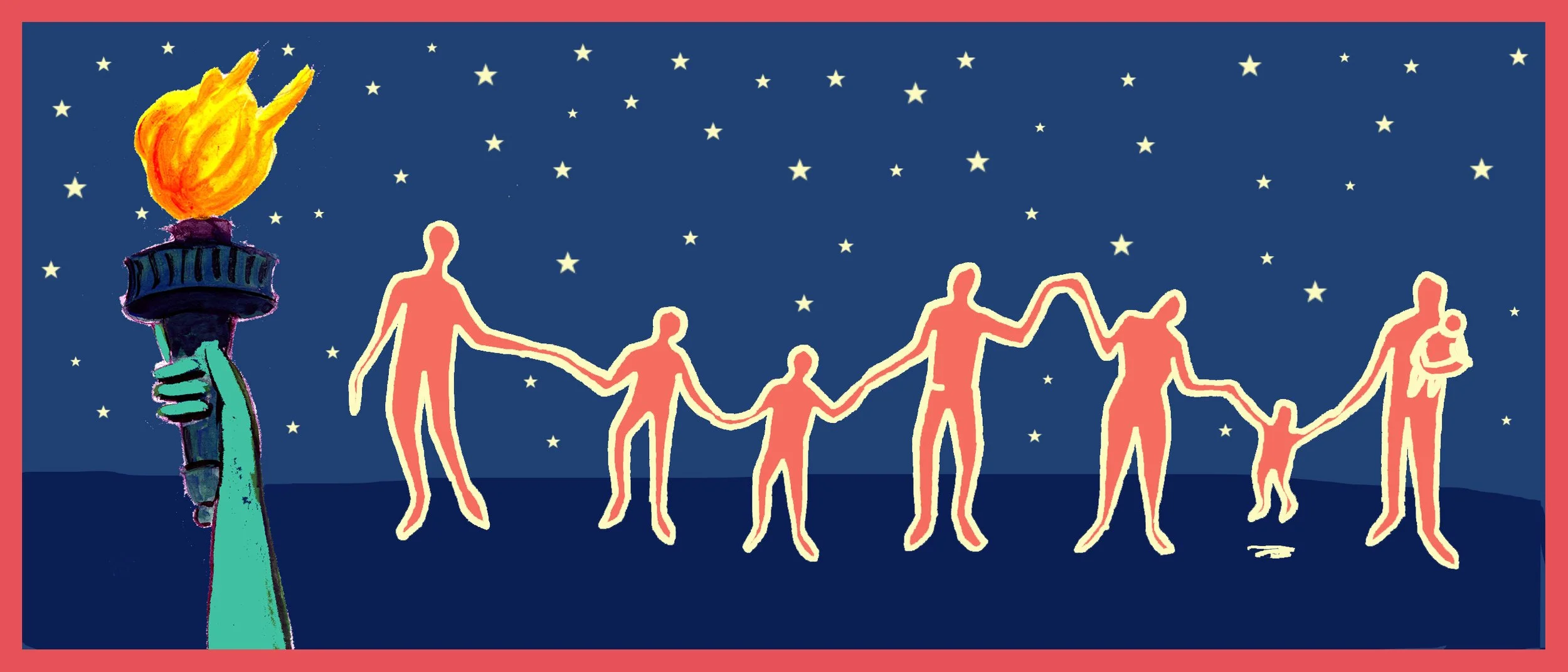
Illustration by LIndsay duPont
Current events in Minneapolis, Washington, DC, and around the world have led me to think about democracy, spheres of influence, and how fragile safety and stability can be. What happens in one community doesn’t stay neatly contained. Fear, uncertainty, relief, and care move through us collectively. Children sense it. Schools feel it. And our bodies register it, often before our thinking minds catch up.
Democracy is not a finished system, but an ongoing practice. From the beginning, our democratic experiment has been about responsibility, not perfection—a commitment to human dignity, shared governance, and the belief that no one is outside the circle of concern. However incomplete and uneven its realization has been, that fundamental intention still asks something of us now.
Democracy doesn’t live only in institutions, policies, or elections. It lives in daily life. It shows up in how we relate to one another when conditions are strained, in whether we can hold complexity without dehumanizing, and in our ability to stay connected even when we are uncertain or disagree.
Like many, I am frustrated by how little I can do to affect what’s happening on the national, much less global, level. Yet even when broad systems are out of reach, we each have a sphere of influence close to home where we can make a difference.
With that in mind, I offer these gentle reminders to anyone who, like me, is looking for ways to use the principles of awareness, love, and compassion to navigate current events wisely:
Notice your window of tolerance. Pay attention to how much news or conversation you can take in without tipping into overload or numbness. Staying engaged for the long haul requires patience and resilience, not getting flooded over and over again.
Take care of yourself by keeping close to what’s real and near. A conversation, a walk, a shared meal, or a familiar routine can be a small, ordinary anchor that helps regulate your nervous system.
Remember that democracy lives in relationships. How we listen, speak, and treat people whose opinions differ from our own is part of how we practice democratic values.
Focus on local action. Attend to what’s within your reach—check in on someone, offer practical support, or join a school or community service project.
To move from intention to action, set aside just ten minutes. Small concrete acts of care and support have a meaningful impact.
Remember interdependence. What we do and don’t do shapes the conditions we live in. Our choices ripple outward.
Hold children in mind without burdening them. Calm presence, predictability, and kindness matter more than explanations—especially when we adults are finding our footing.
Let compassion include yourself. You don’t need a polished opinion or a clear plan. Pausing, listening, and staying connected are meaningful ways to care for yourself.
Keep room for lightness when it shows up naturally. This isn’t denial; it is one way to care for yourself and your community.
It’s tempting to harden, withdraw, or sort ourselves into opposing sides. But there is another option. We can stay steady remembering that dignity matters and everything connects. Let that recognition be our guide.
May everyone be safe and live in peace, Susan